
Leaf removal
Identifying trees that drop leaves in fall
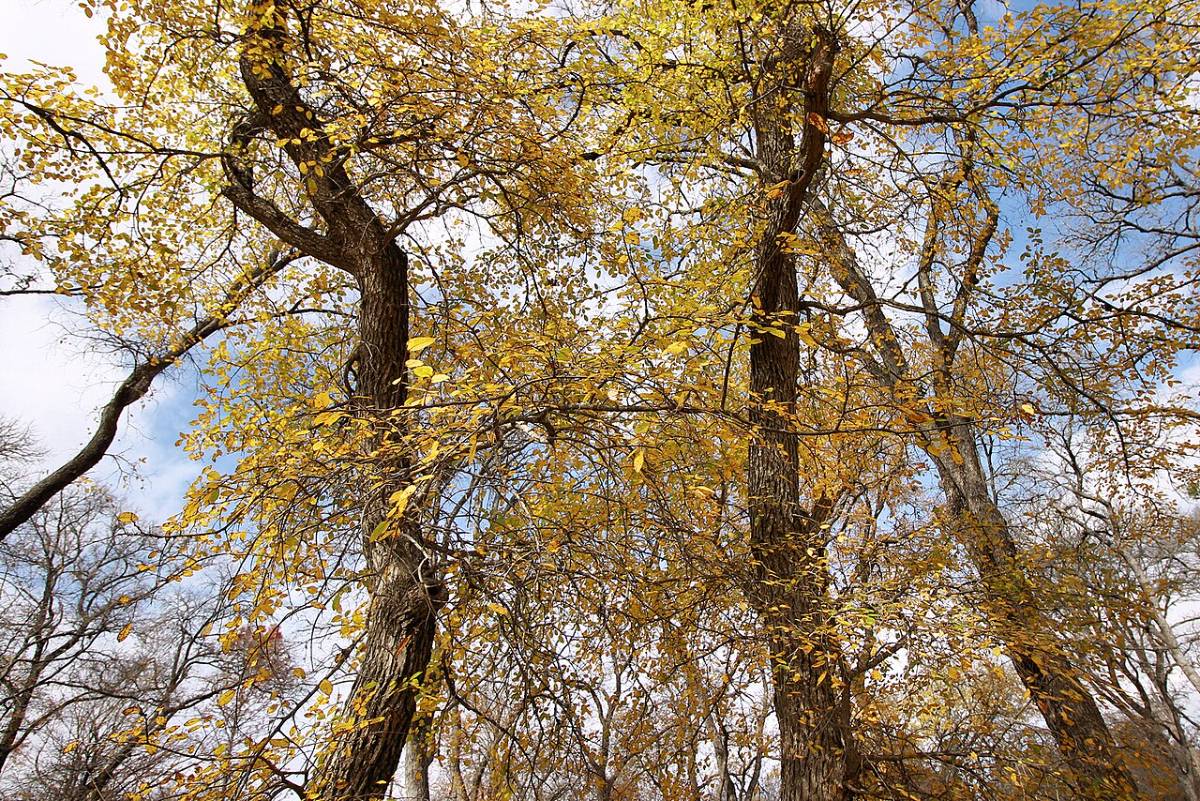
Fall in Central Texas doesn't look like a New England postcard. Our color shows up late, it's patchy, and some years it barely shows up at all. But the leaves still come down, and in a neighborhood full of mature cedar elms, pecans and oaks, they come down by the bagful.
Knowing which trees you have tells you a lot: roughly when the leaves will drop, whether it happens all at once or drags on for weeks, and what kind of mess you'll be left with (tiny elm leaves that disappear into flower beds, or dinner-plate sycamore leaves that mat down the grass). Here's how to identify the most common fall-shedding trees around Pflugerville, Round Rock, Hutto and north Austin.
First, the tree that isn't on this list: the live oak. Live oaks don't drop their leaves in fall. Texas live oaks shed their old leaves in late winter, starting around late January, as the new spring leaves push out. If your yard is mostly live oaks, your big leaf removal job comes in late winter and early spring, not now. Ashe juniper (what most people call "cedar") is evergreen and doesn't put on a leaf drop either.
The Austin-area trees that drop leaves in fall
Cedar elm
Ulmus crassifolia · native
- The tree
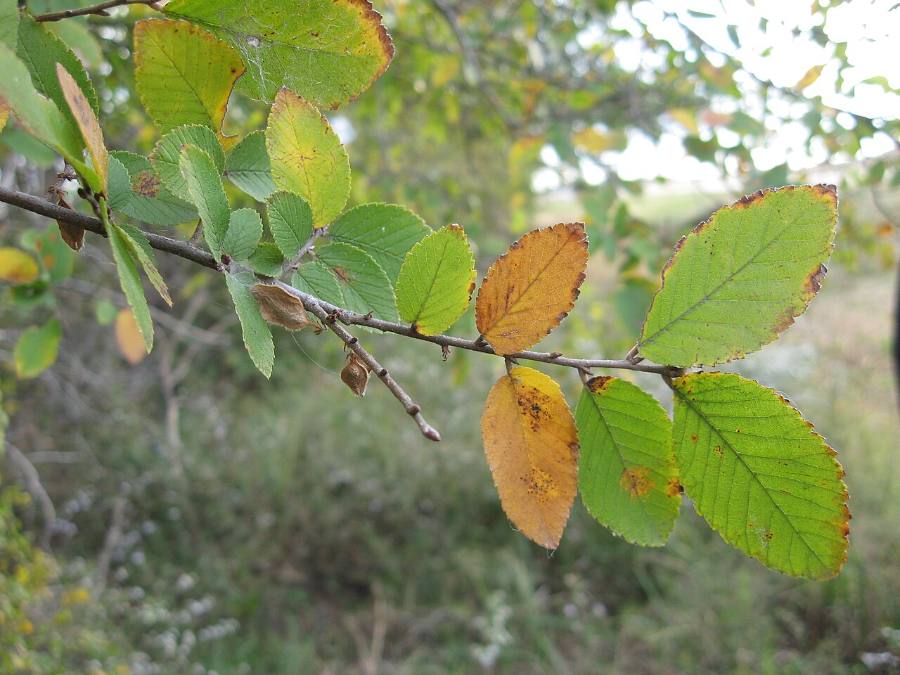
- Probably the most common shade tree in Austin-area neighborhoods. Medium to large (30 to 80 feet), with a spreading, often irregular shape and drooping branch tips. Older twigs sometimes have corky "wings" along them.
- The leaf
- Small, usually 1 to 2 inches long, with toothed edges and a lopsided base. The giveaway is texture: run your thumb over the top and it feels like fine sandpaper. The leaves are also noticeably thick and stiff.
- Fall color
- Yellow to gold, sometimes with a little orange.
- Drop timing
- Late. Cedar elms often hold on into early winter, and the drop tends to stretch out over several weeks.
- Leaf removal
- Small leaves slip through rake tines and settle deep into flower beds and shrubs. On the plus side, they mulch down well with a mower if you keep up with them.
Pecan
Carya illinoinensis · native · the Texas state tree
- The tree
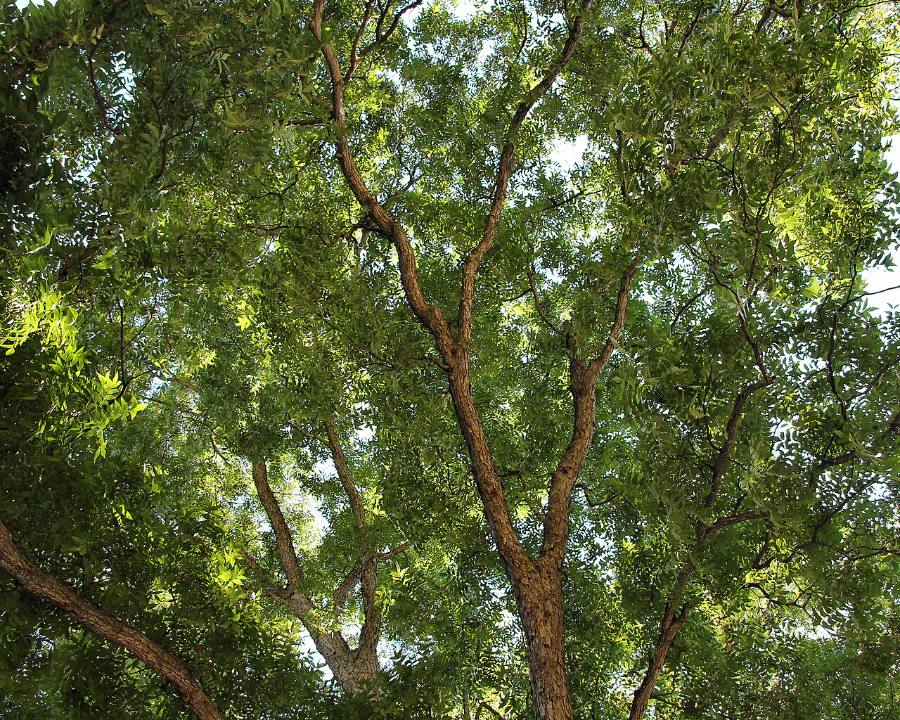
- Big, 50 to 70 feet or more, with a tall, open canopy. Common along creeks and on older lots that used to be farmland or orchards.
- The leaf
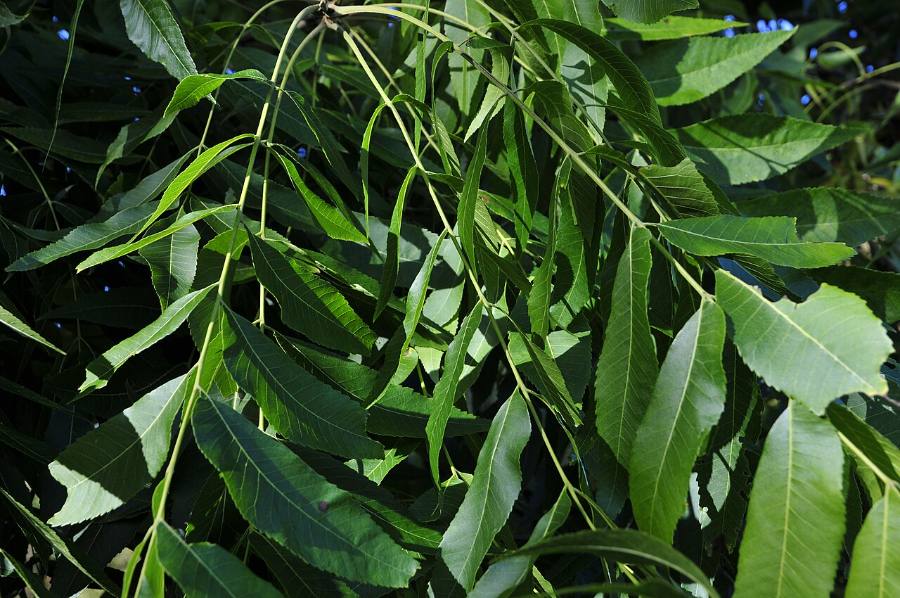
- Compound: one "leaf" is actually a long stem, 12 to 18 inches, lined with 9 to 17 narrow, pointed leaflets that are each 2 to 4½ inches long. Leaflets are often slightly curved like a sickle.
- Fall color
- Yellow to yellow-brown.
- Drop timing
- Pecans tend to start shedding earlier than the oaks and elms, and leaflets can come down separately from the main stems.
- Leaf removal
- It's never just leaves. Expect bare leaf stems, husks, nuts and small twigs mixed in, all of which fill a mower bag faster than leaves alone.
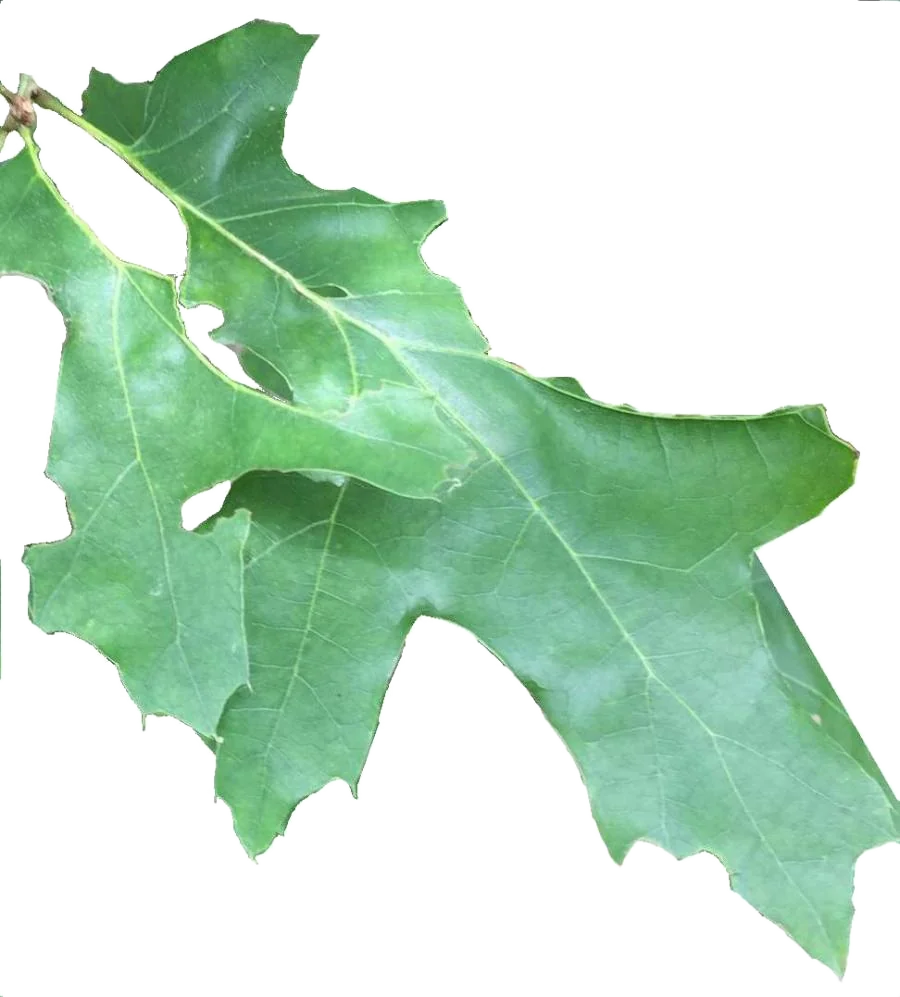
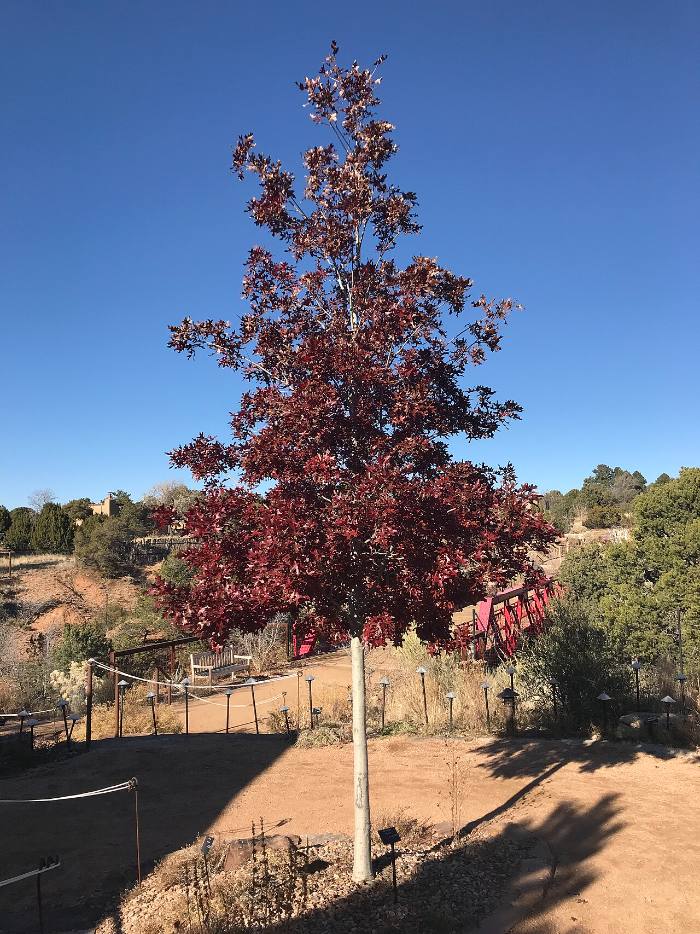
Texas red oak and Shumard oak
Quercus buckleyi and Quercus shumardii · native
- The tree
- Texas red oak is a medium tree (30 to 50 feet), often with more than one trunk. Shumard oak is its larger cousin and a popular landscape tree. The two cross-breed along the I-35 corridor, so many trees in town are a bit of both.
- The leaf
- Classic "red oak" shape: deep lobes, and every lobe ends in a sharp little bristle tip. That bristle is the quickest way to tell a red oak from a bur oak or post oak, whose lobes are rounded.
- Fall color
- The best in town when conditions cooperate: red, orange, and even purple.
- Drop timing
- Usually late November into December, with some trees hanging on to brown leaves well into winter.
- Leaf removal
- Leaves are leathery and slow to break down, and acorns come along with them.
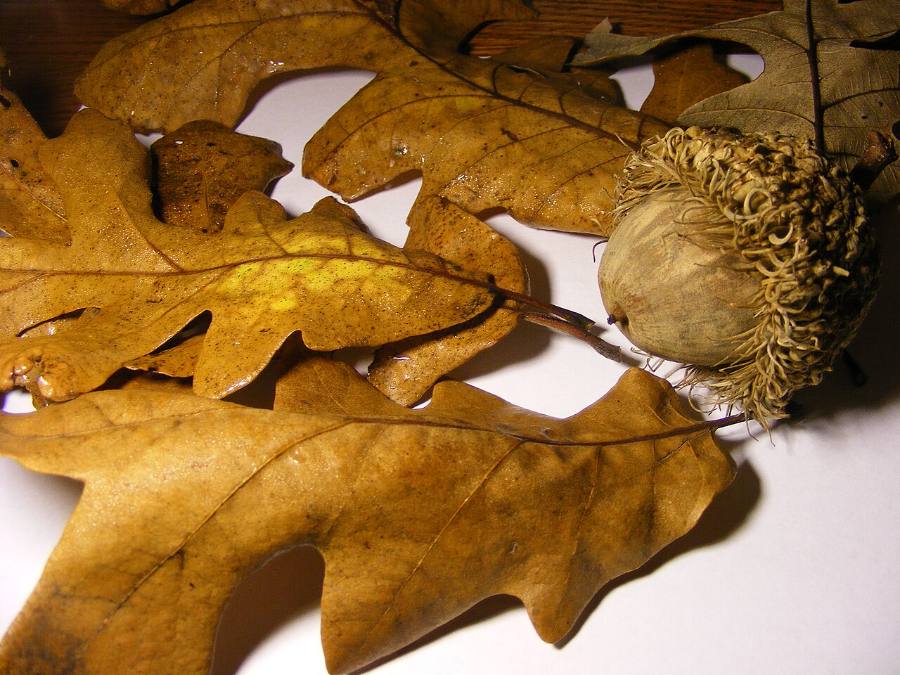
Bur oak
Quercus macrocarpa · native
- The tree
- A giant, 70 to 90 feet at maturity, with a massive trunk and coarse, heavy branches. Often planted in newer subdivisions and parks because it handles our heat well.
- The leaf
- Large (roughly 3 to 6 inches long and nearly as wide) with a distinctive "waist": the bottom half is cut by deep lobes, while the top third flares out wide with shallow lobes. Look underneath for the acorns. They're huge, with a shaggy, fringed cap that gives the tree its name.
- Fall color
- Not much to look at. Mostly tan to brown, occasionally a decent gold.
- Drop timing
- Late fall into early winter.
- Leaf removal
- Big leaves mean big volume. They mat down on a lawn quickly, especially after rain.
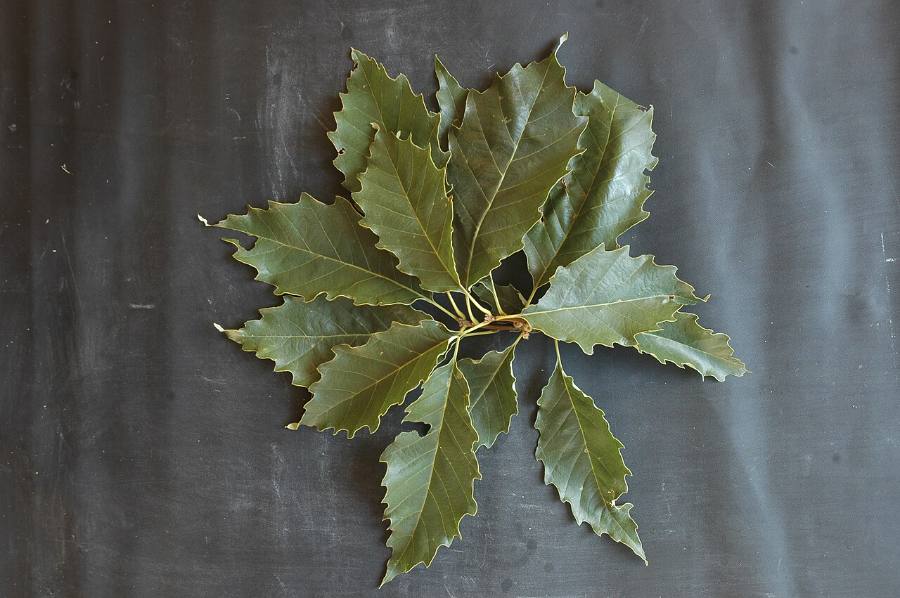
Chinkapin oak
Quercus muehlenbergii · native
- The tree
- A medium shade tree (40 to 50 feet) that does well on our limestone soils. Often planted as a street or yard tree.
- The leaf
- It doesn't look like a typical oak leaf. No deep lobes: the leaf is a long oval with a row of coarse, pointed teeth along each edge, a bit like a chestnut leaf.
- Fall color
- A mix of yellow, orange, red and brown.
- Drop timing
- Late fall, along with the other oaks.
- Leaf removal
- Medium-size leaves that rake up easily, plus a crop of small acorns.
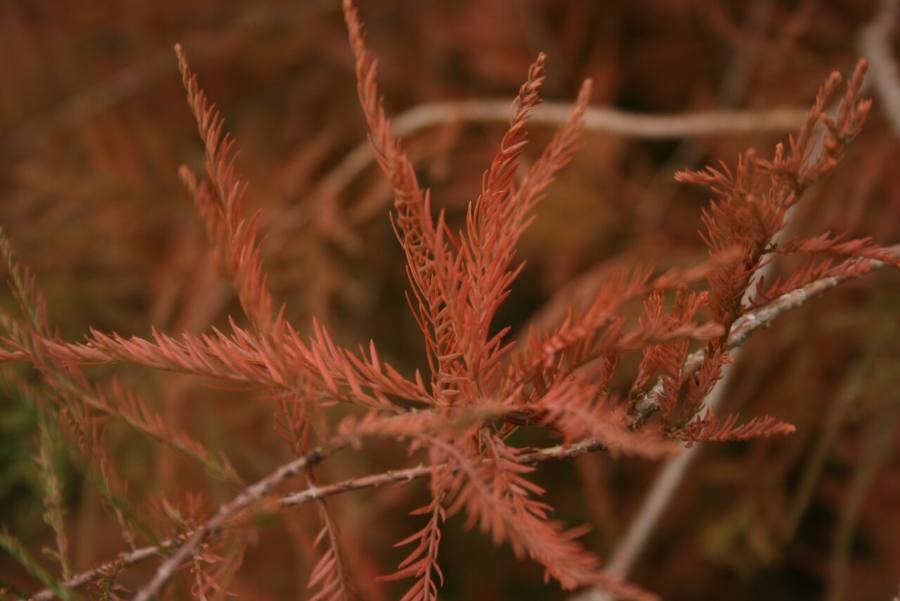
Bald cypress
Taxodium distichum · native
- The tree
- Tall and cone-shaped when young (60 to 80 feet eventually). Lines area creeks and rivers and shows up in plenty of yards and HOA common areas.
- The leaf
- It's a conifer, but one that loses its leaves, which is where the "bald" comes from. The foliage is soft and feathery, made of flat, needle-like leaves lined up along small green branchlets.
- Fall color
- Rusty orange to cinnamon brown, one of our more dependable fall colors.
- Drop timing
- Late November through December.
- Leaf removal
- It drops whole branchlets, needles still attached. They're light, they blow everywhere, and they clog gutters, pool skimmers and drains.
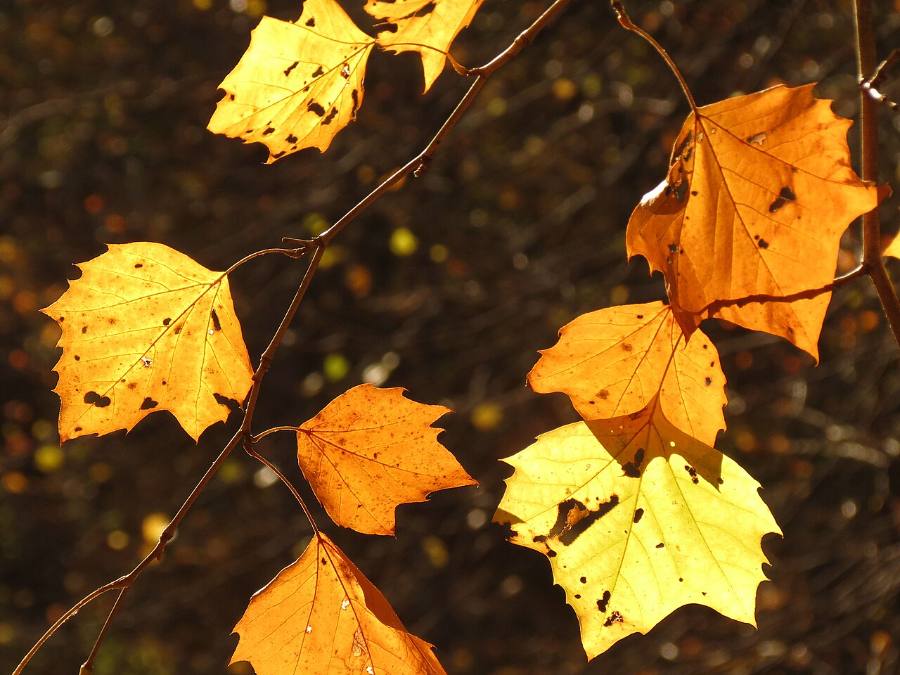
American sycamore and Mexican sycamore
Platanus occidentalis and Platanus mexicana
- The tree
- Easy to spot year-round: the bark peels away in patches, leaving the upper trunk and limbs a mottled white, tan and green. Fast-growing and common near water and in newer landscaping.
- The leaf
- Very large and maple-shaped, often 4 to 8 inches or more across, with three to five shallow, pointed lobes. Mexican sycamore leaves are smaller, with a silvery, fuzzy underside.
- Fall color
- Yellow to tan-brown.
- Drop timing
- Fall into early winter, and a lot comes down at once.
- Leaf removal
- These are the leaves that fill a bag the fastest. They're slow to break down and will smother grass if left in place.
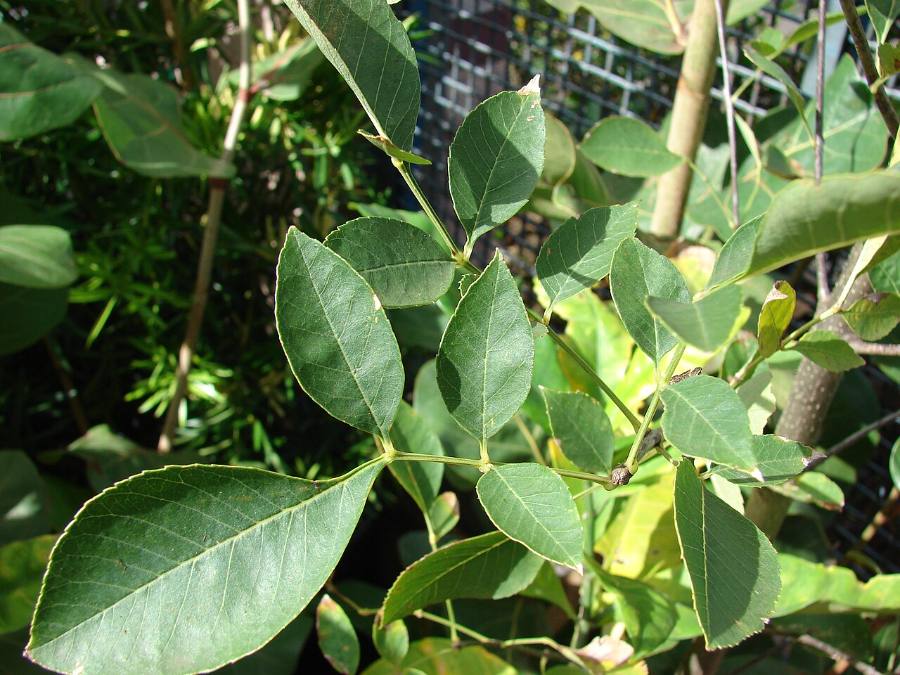
Arizona ash and Texas ash
Fraxinus velutina and Fraxinus albicans
- The tree
- Arizona ash was planted all over Central Texas subdivisions in past decades because it grows fast. Many of those trees are now big and aging. Texas ash is the native look-alike, with darker leaves and a denser, more upright form.
- The leaf
- Compound, like a pecan, but much shorter: usually 3 to 7 oval leaflets per stem instead of a long row of narrow ones. Leaves grow in opposite pairs on the twigs.
- Fall color
- Yellow. Texas ash can add orange and purple.
- Drop timing
- Often one of the earlier trees to drop, and it lets go of a lot of leaves over a short stretch.
- Leaf removal
- A heavy, quick drop, plus bare leaf stems and, on some trees, clusters of winged seeds.
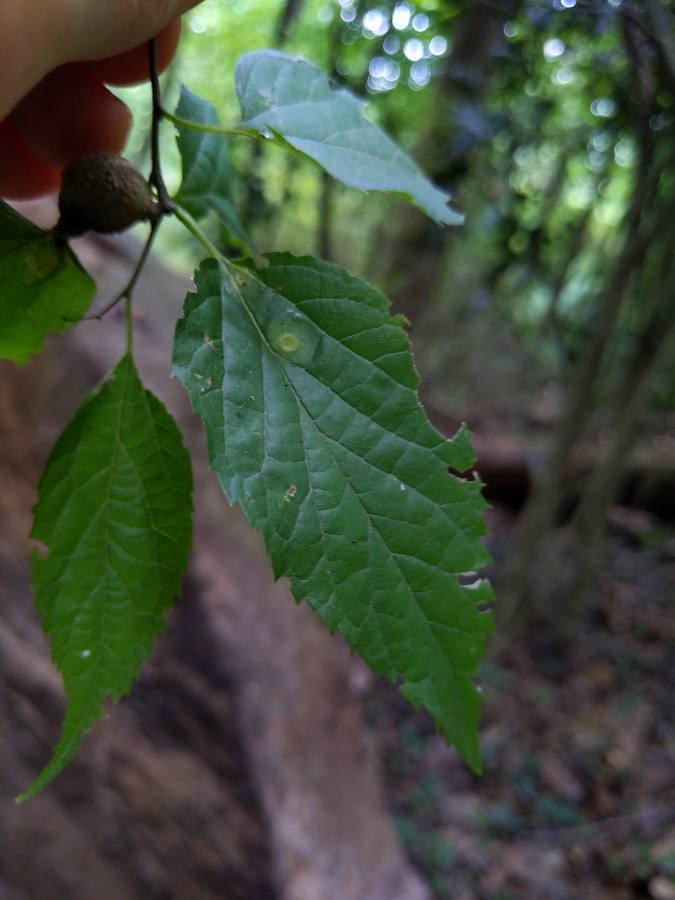
Hackberry (sugarberry)
Celtis laevigata · native
- The tree
- The tree nobody planted. Birds drop the seeds, so hackberries pop up along fence lines, beside foundations and in the back corners of yards. Gray bark covered in corky, warty bumps is the best ID clue.
- The leaf
- 2 to 4 inches long, with an uneven, lopsided base and a long, tapering tip. Edges are mostly smooth, sometimes with a few teeth.
- Fall color
- Pale yellow, often just fading to brown.
- Drop timing
- Fall, usually spread out over several weeks.
- Leaf removal
- Small orange-to-purple berries come down too and can stain decks and patios.
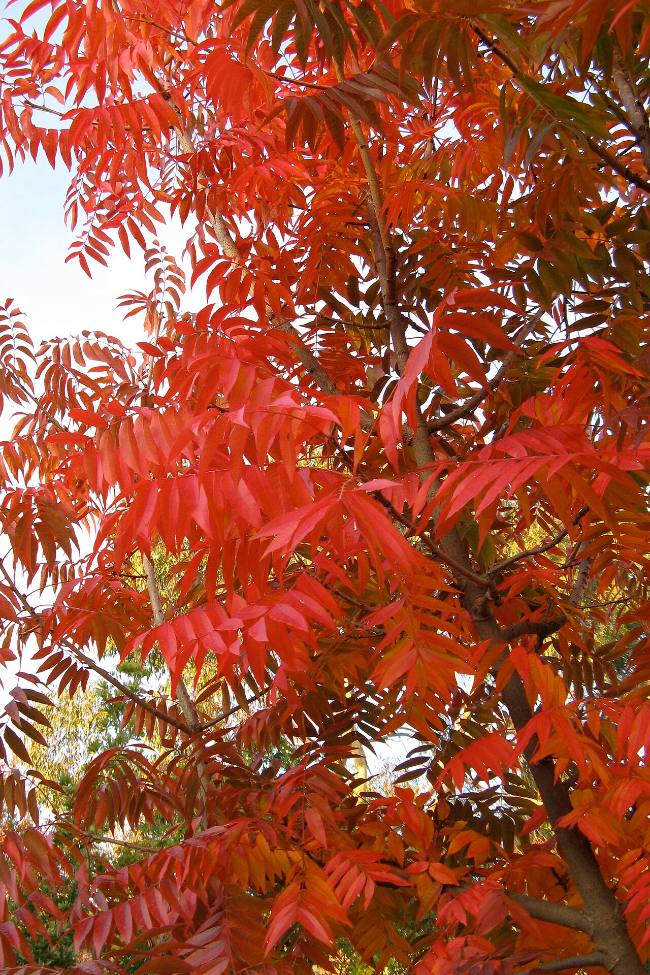
Chinese pistache
Pistacia chinensis · non-native
- The tree
- A medium, rounded tree planted in a lot of area yards and parking lots for its fall color. Worth knowing: the City of Austin lists it among local invasive plants because seedlings from female trees have been spreading into natural areas.
- The leaf
- Compound, with roughly 10 to 12 narrow, pointed leaflets per stem, like a smaller, neater pecan leaf.
- Fall color
- The showiest in the neighborhood: brilliant orange, scarlet and red.
- Drop timing
- Once the color peaks, the leaves don't stick around long. The drop can be fast.
- Leaf removal
- Female trees also drop clusters of small berries.
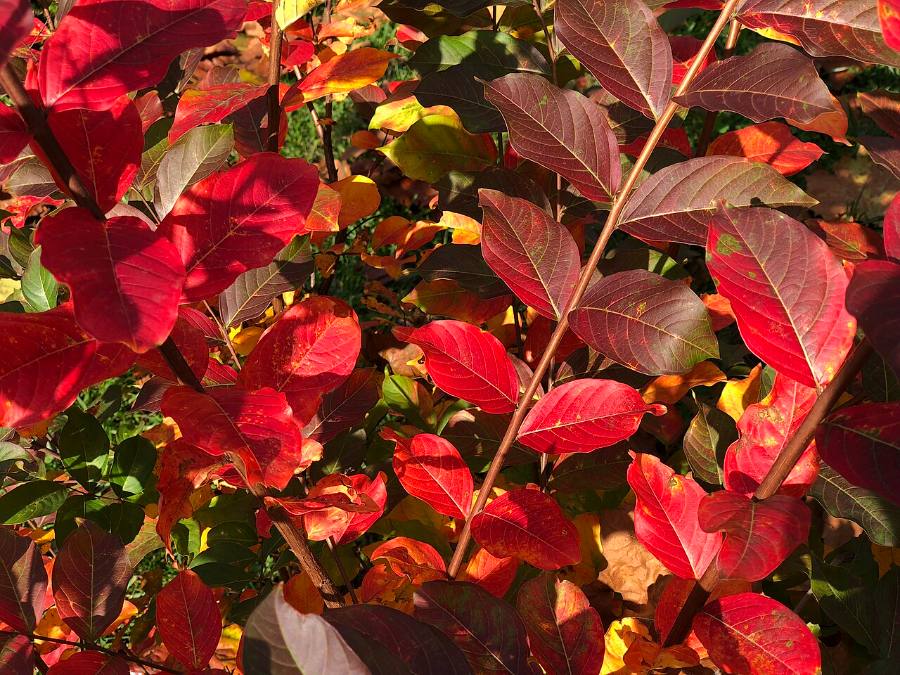
Crape myrtle
Lagerstroemia indica · non-native
- The tree
- The summer-blooming small tree in front of half the houses in Texas. Smooth, peeling, often cinnamon-colored bark and multiple trunks.
- The leaf
- Small, smooth ovals, 1 to 3 inches long, with no teeth.
- Fall color
- Red, orange or yellow, depending on the variety.
- Drop timing
- Fall into early winter.
- Leaf removal
- Not a huge volume per tree, but they're usually planted right in beds and along walkways, and the round seed pods follow the leaves.
A rough leaf-drop calendar
Every year is different (more on why below), but here's the general order things tend to happen around Pflugerville and Austin:
| When | What's coming down |
|---|---|
| Mid to late Oct | Early drop on drought-stressed trees, Arizona ash and pecans. Color begins on some trees. |
| November | Pecans, ash, crape myrtles and Chinese pistache in full swing. Color builds on red oaks, cypress and cedar elms. |
| Late Nov to Dec | The main event. Cedar elms, red and Shumard oaks, bur oaks, bald cypress and sycamores drop, often in big waves after the first freeze or a windy cold front. |
| January | Stragglers: oaks and elms that held on to dead leaves finally let go. |
| Late winter to spring | Live oaks shed their old leaves as new growth pushes out. Round two of leaf removal. |
What decides when the leaves fall
Shorter days start the clock. Day length is the main signal a tree uses to know it's time to shut down for winter. As the nights get longer, the tree stops making chlorophyll (the green pigment), pulls nutrients back into its branches and roots, and grows a thin layer of cells at the base of each leaf stem, called the abscission layer. Once that layer is complete, the leaf is basically hanging by a thread, and the next breeze takes it.
Temperature sets the pace. Day length is predictable. Austin's weather isn't. Cool nights speed things up, and a warm fall drags everything out. In 2024, Austin had its hottest October on record, and the fall color that usually starts in mid-to-late October and peaks by late November didn't really arrive until mid-December. The first freeze often turns a slow trickle into a full-on drop. On average, Austin's first freeze comes around December 2 at Camp Mabry and around November 28 at the airport.
Drought makes leaves fall early. A stressed tree drops leaves to save water. After a dry summer you'll often see trees shedding yellow or crispy brown leaves in August and September, well before real fall. Those trees usually have less left to drop later and tend to skip the good color.
Extra water and hard pruning delay it. A wet spring and early summer, heavy irrigation, or aggressive pruning all push a tree into strong growth, and it goes dormant later. Trees right next to streetlights also tend to hold their leaves longer, since the artificial light muddies the day-length signal.
A sudden hard freeze can lock leaves on the tree. If a hard cold snap hits before the abscission layer finishes forming, the leaves can die in place instead of dropping cleanly. Those brown leaves then hang on and fall a few at a time all winter, which is why some years the oaks seem like they'll never finish.
Each species runs on its own schedule. That's why the ash in one yard can be bare while the cedar elm next door is still green. If you have a mix of trees, expect a long season with several waves instead of one big drop.
Wind and rain finish the job. Once leaves are loose, a strong cold front or a heavy rain can bring down days' worth of leaves overnight. That's why it so often looks like everything fell at once.
What decides how many leaves fall
Size and age of the tree. A mature pecan or bur oak carries many times the leaves of a young tree, and every one of them ends up on the ground. Canopy spread matters more than height: a wide cedar elm over the backyard will out-drop a tall, narrow tree.
Leaf size and type. Big leaves (sycamore, bur oak) create bulk fast and mat down. Tiny leaves (cedar elm, bald cypress) are less bulky but harder to rake and work their way into everything. Compound leaves (pecan, ash, pistache) break apart into leaflets and stems.
How good the growing year was. A wet spring and summer grows a full, dense canopy, and a full canopy means more leaves in the fall. In a drought year, trees grow fewer leaves and drop some of them early, so the fall drop is lighter.
Everything that comes down with them. Pecan husks, acorns, cypress branchlets, hackberry and pistache berries, seed pods and small dead twigs can easily double what has to be hauled off.
Your neighbors' trees. Leaves don't respect property lines. If the yard upwind of you has a big pecan or a row of oaks, a good north wind will deliver a share of their leaves to your lawn.
Once you know your trees
A light layer of leaves is fine. Mow over it and let the shredded bits feed the soil. The trouble starts when leaves pile up, get wet and sit. For how to time leaf removal around all of this, one visit or two, and when to plan the live oak round, see when to schedule fall leaf removal in Pflugerville. And if you'd rather not spend your weekends on it, I do leaf removal across Pflugerville and the surrounding area: lawn, beds, patio and driveway, and the leaves leave with me.
Sources
- City of Austin Grow Green: Native and Adapted Tree Guide for Central Texas
- City of Austin: Austin invasive plants guide
- Texas A&M Plant Clinic: Live oak dropping leaves in early spring
- KUT: Austin's fall foliage is here, but only for a fleeting moment (Dec. 2024)
- Montana Public Radio Field Notes: What determines when leaves fall
- KVUE: Average dates of the first freeze for Central Texas
- Texas SmartScape: Cedar elm
Photo credits
- Cedar elms at McKinney Falls: Larry D. Moore, CC BY 4.0
- Cedar elm leaves: Mason Brock, public domain
- Pecan leaf: Homoarborea, CC0
- Pecan canopy, Zilker Park: Larry D. Moore, CC BY 4.0
- Texas red oak leaf: georgiakharper, CC BY 4.0
- Texas red oak in fall: Katherine Wagner-Reiss, CC BY-SA 4.0
- Bur oak leaves and acorn: Supportstorm, public domain
- Chinkapin oak: Bruce Kirchoff, CC BY 2.0
- Bald cypress in autumn: Sten Porse, CC BY-SA 3.0
- Sycamore leaves: Katja Schulz, CC BY 2.0
- Arizona ash leaves: Forest & Kim Starr, CC BY 3.0
- Hackberry leaf: Brucewinter, CC BY-SA 4.0
- Chinese pistache: Sterry2607, CC BY-SA 3.0
- Crape myrtle: Famartin, CC BY-SA 4.0


Photos are cropped and resized from the originals.